

The Children’s Rights Innovation Fund (CRIF) team arrived to Melbourne for Women Deliver 2026 carrying with us a story that has lived with us for years, unsettled us, challenged our imagination, and slowly become a clear metaphor for understanding the realities young people navigate within philanthropy and social justice funding spaces. That story is The Tiny Cave and the Magnificent Creatures.
As we’ve shared the Tiny Cave with audiences both virtual and in person, we have come to honour the subtleties of this metaphor not simply as a creative exercise, but as a political tool for confronting the emotional and structural realities of funding systems. People have responded with curiosity, discomfort, reflection, and sometimes deep emotional resonance. And perhaps that is because the story asks difficult questions about scarcity, power, survival, and the conditions under which young people are expected to transform the world.
When we first began shaping the concept sometime in 2023, we struggled to find language for what we were trying to name. We only knew that something about traditional funding systems felt deeply limiting – emotionally, politically, and imaginatively. As the metaphor evolved, so did our understanding of the words we had been searching for: expansiveness, flexibility, trust, partnership, abundance. “The Tiny Cave emerged from our desire to politically and emotionally interrogate those realities.” Dr. Ramatu Bangura, Executive Director, CRIF.
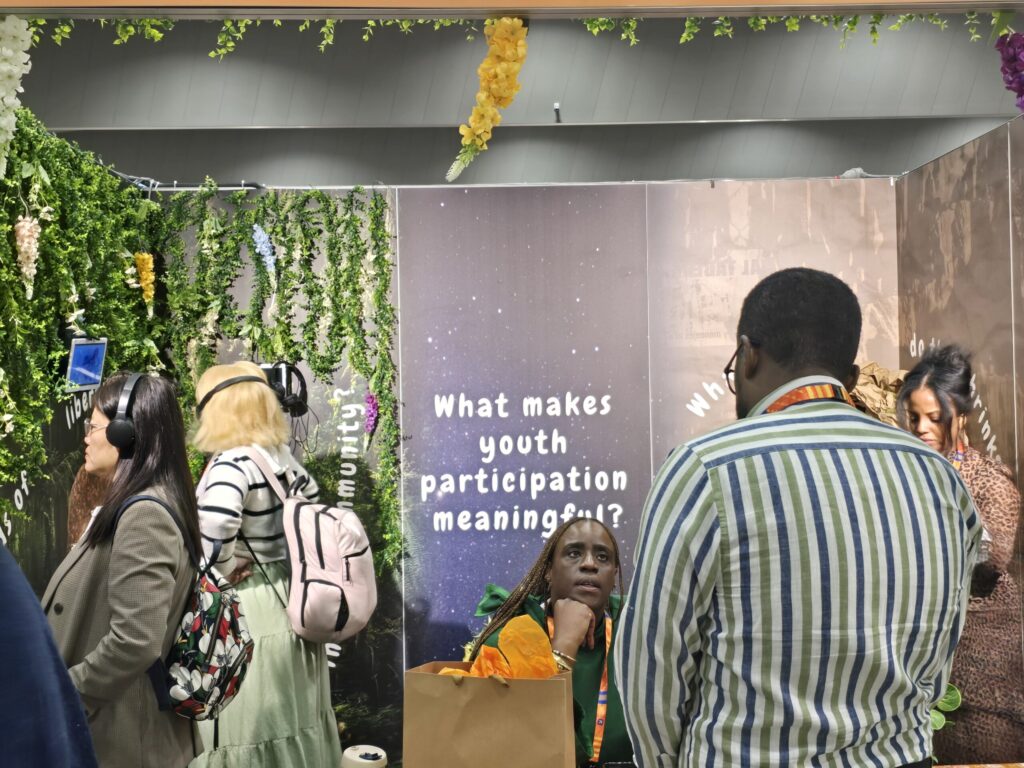
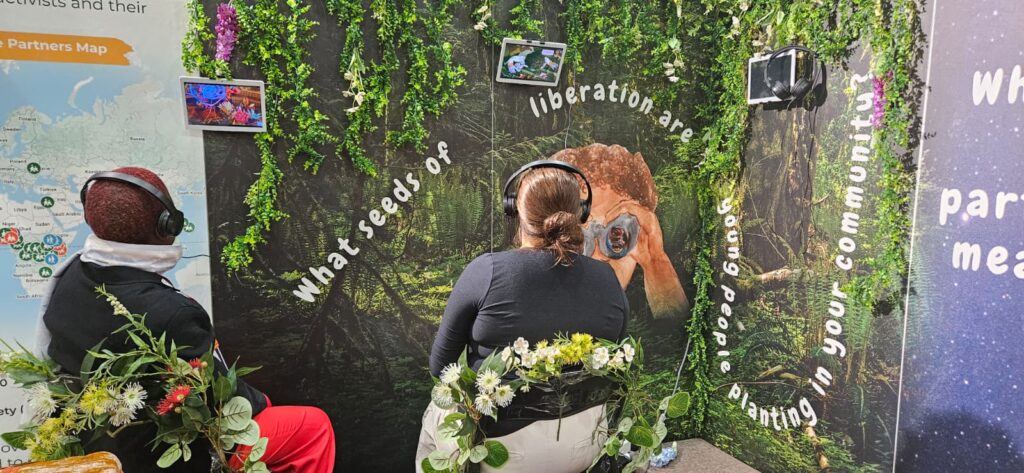
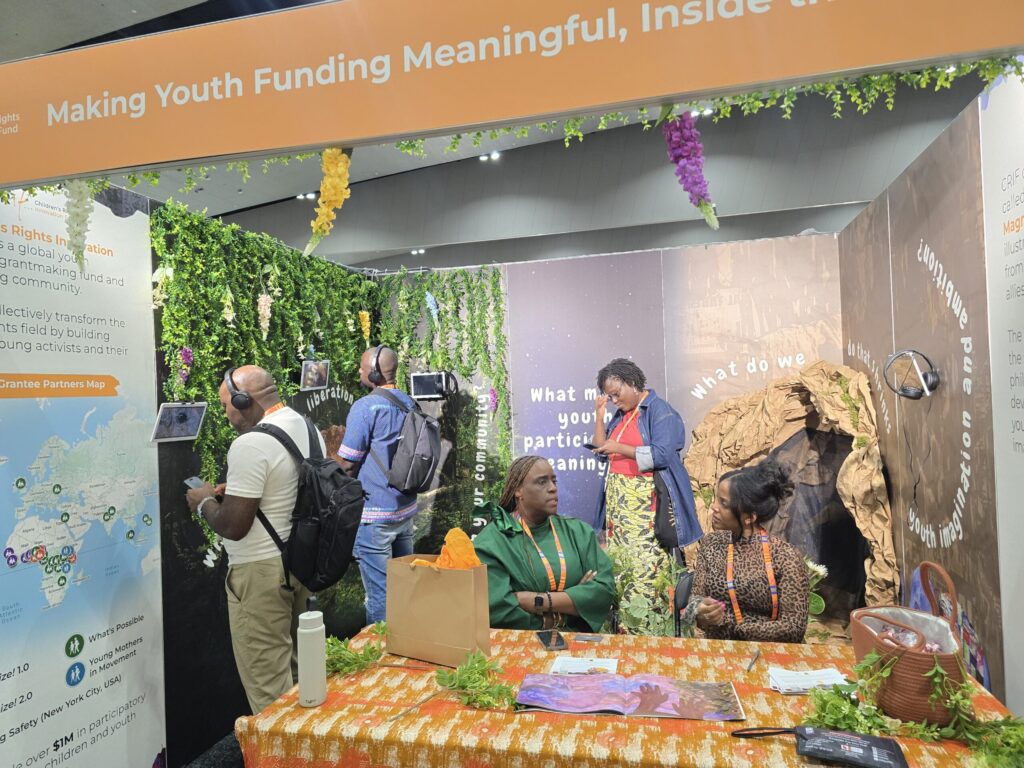
At Women Deliver 2026, we brought the Tiny Cave story to life again since its launch in Ghana 2024. Located at Booth G19, the “Making Youth Funding Meaningful Inside the Tiny Cave” installation became an immersive experience that invited visitors into the emotional landscape of funding inequities. Built around the symbolic journey from the Abundant Forest, through the Precipice, and into the ‘Tiny Cave’, it encouraged participants to reflect not only on what scarcity feels like, but also on what becomes possible when young people are resourced differently. Through, textured visuals, and carefully curated storytelling, visitors stepped into a space intentionally designed to evoke wonder while also provoking reflection.
“The Cave felt painfully familiar. So many young people are surviving inside systems that reward exhaustion.”
Visitor at the CRIF Tiny Cave Booth
Inside the booth, visitors engaged with an eight-minute visual storytelling experience through iPads and headsets placed across the installation. Many stayed longer than expected. Some returned with colleagues and friends. Others paused to reflect on how deeply the metaphor mirrored experiences within philanthropy spaces globally. What moved us most was not simply that people understood the metaphor, but that they recognized themselves within it.
But the Tiny Cave did not exist in isolation from the broader conversations unfolding across Women Deliver.
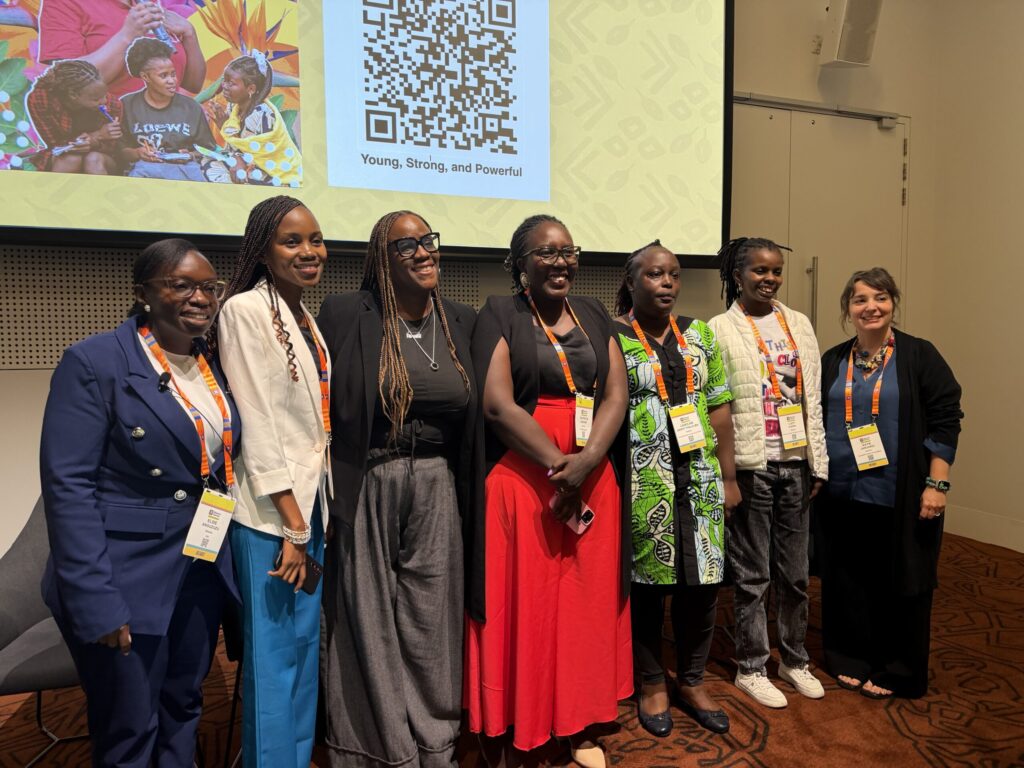
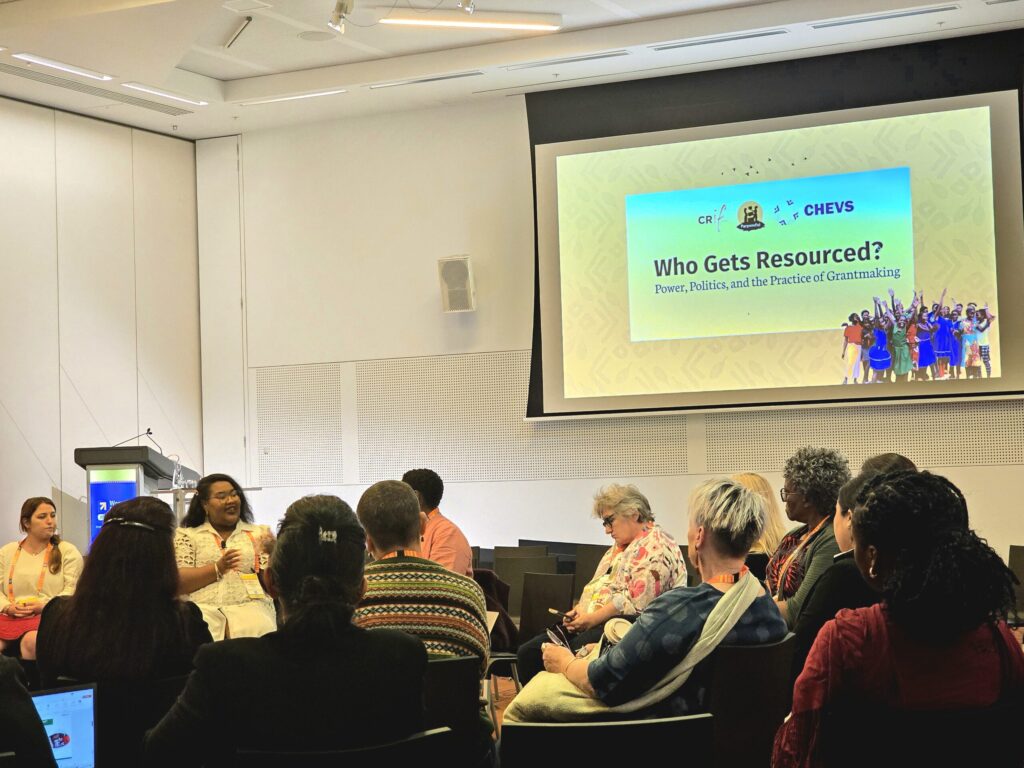
The political questions raised within the Tiny Cave echoed deeply throughout the panel discussions and convenings CRIF participated in, particularly those focused on resourcing young people and supporting young mothers within movements and organizing spaces. It was evident in the conversations that young people continue to be celebrated rhetorically while remaining structurally under-resourced.
“The problem in philanthropy is not that money does not exist but that money does not go to the movements doing the work.”
Gabrielle Bailey, Senior Program Officer- Grantmaking & Constituency at the ‘Resourcing Resistance Panel
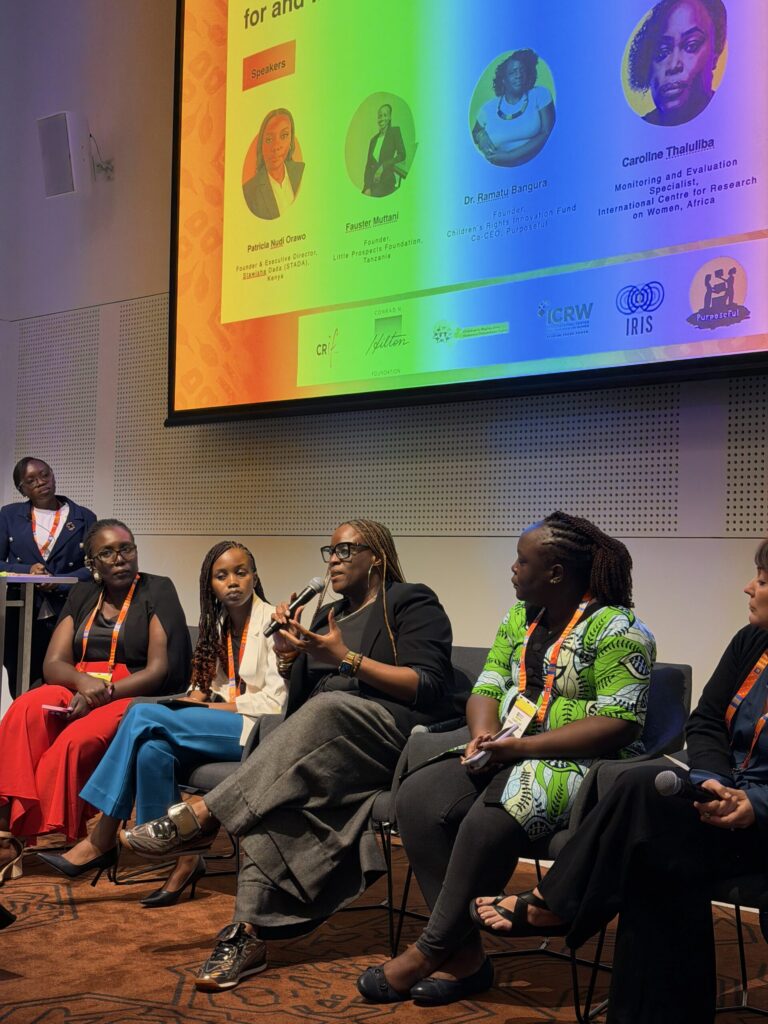
Young people are still too often invited into conversations without meaningful decision-making power or with restrictive funding. More than 70 to 80% of Youth-led groups operate on an annual budget of less than $10,000 according to Restless Development.
And for young mothers, these barriers become even sharper.
In discussions around resourcing young mothers, conversations repeatedly returned to the invisibilized labour many carry while organizing, caregiving, surviving economically, and sustaining movements simultaneously. We reflected on how philanthropy frequently fails to account for the fullness of young people’s realities particularly the realities of care, motherhood, burnout, emotional labour, and survival.
Young Mother’s work sat at the heart of both the Tiny Cave and the conversations we engaged in throughout the convening.
Learn more about our work with Young Mothers in this Learning Brief by CRIF alongside CRVPF, IRIS, ICRW and Purposeful.
To imagine abundance in a sector deeply shaped by scarcity is political. To insist that young people deserve trust before perfection is political. To create spaces where emotion, storytelling, art, and systems critique coexist is political. And perhaps that is why the Tiny Cave continues to resonate.
The conversations at Women Deliver reminded us that transformation requires more than inclusion rhetoric. It requires a fundamental rethinking of how philanthropy understands power, partnership, care, risk, and possibility.
Young people do not simply need seats at tables designed without them in mind. They deserve expansive forests. They deserve bridges that hold. And they deserve worlds beyond the Tiny Cave..